


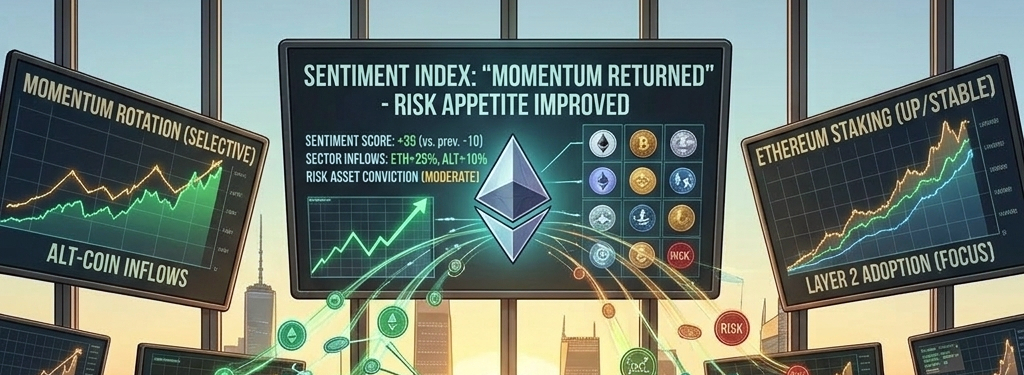


The Fear & Greed Index is up to 40, a clear step up from last week’s fear, while social chatter has turned mildly bullish with the usual mix of XRP hype, memecoin optimism, and a few dramatic warnings for balance. Underneath that, trading activity has picked up fast: derivatives volume jumped 172%, which tells you conviction is back, or at least leverage is. That doesn’t make this a calm market. It makes it an active one. Fear has faded, greed hasn’t quite arrived, and traders are already behaving like the next move needs to happen immediately. So what’s actually driving the market? Lets dive in!
Gold Is Now Backing a Stablecoin
Theo, a tokenization platform, closed a $100 million facility in 24 hours to back thUSD, a stablecoin pegged to the dollar but powered by gold. The strategy involves buying tokenized gold while simultaneously shorting gold futures to hedge price swings and capture a spread. How much can you actually earn holding thUSD? Read m0re.
PYUSD Just Went Global
PYUSD just became available to users across 70 countries, and the implications go beyond just holding a digital dollar. PYUSD’s market cap grew 600% in 2025 alone, rising from around $500 million to $3.6 billion by year-end. What are users in these markets actually getting? Read more.
Ripple Is Betting Big on Brazil
Ripple announced a major expansion into Brazil, including a VASP license application with the central bank. Local banks are already processing real transactions on the network. Open interest jumped 33% in two weeks. How did XRP react to the announcement? Read more.
Aster Chain Launches With Built-In Privacy
Aster launched its own blockchain, and it’s built around one idea: no one can see what you’re trading. The team calls it dismantling the “transparency trap” of modern DeFi, where your trades are visible to competitors the moment you make them. How exactly does it hide your wallet activity? Read more.
Phantom Can Now Offer Regulated Derivatives
Phantom, one of the most popular crypto wallets in the Solana ecosystem, just received a no-action letter from the CFTC, a regulatory move that has no precedent for this type of product. The letter means Phantom can connect users directly to regulated derivatives markets inside the app, without registering as a broker. But what exactly will Phantom users be able to trade through the app? Read more.
How does the new SEC/CFTC joint “interpretation” change altcoin risk?
TLDR: It likely shifts altcoin risk from “uncertain for everyone” to “clearer winners and clear regulatory losers,” but the exact impact depends on how broad the new security definition is.
- If more tokens are explicitly treated as securities, US enforcement, delisting, and disclosure risk rises for many altcoins.
- If some tokens are clearly labeled “commodities,” larger, more decentralized chains could see risk premiums fall relative to smaller, issuer‑driven tokens.
- Venue and DeFi risk increases where protocols look like unregistered exchanges or derivatives platforms for in‑scope tokens. Disclaimer: This alpha is provided by CMC AI. CMC AI can make mistakes—please DYOR. Not financial advice.
Disclaimer: This alpha is provided by CryptoMx AI. CryptoMx AI can make mistakes—please DYOR. Not financial advice.